Describe where you think rodents are entering through Call Now and you will reach our team serving the Charlottesville area.
Common rodent entry points
- Foundation cracks, weep holes and sill plates
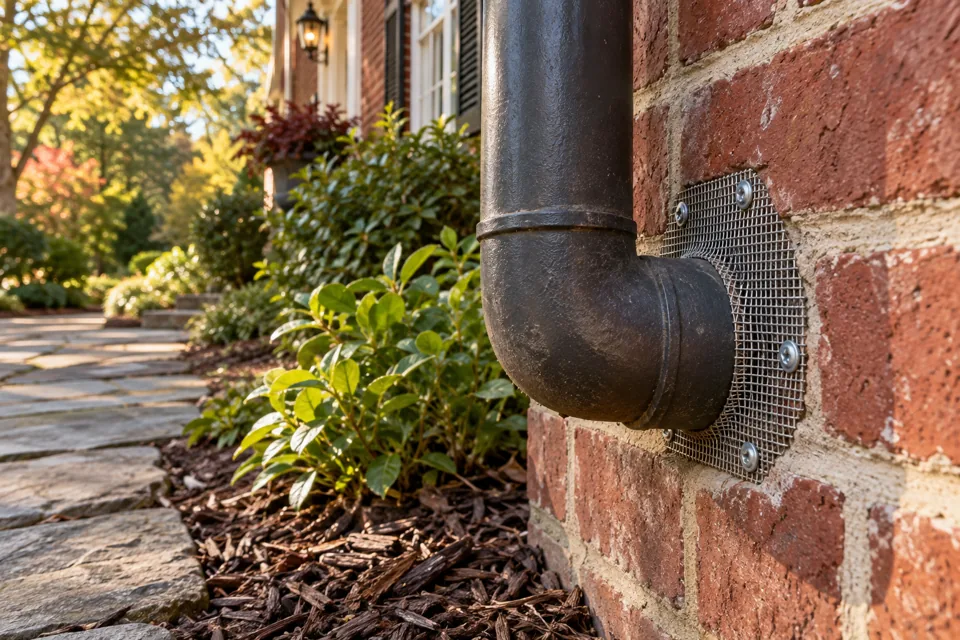
- Dryer vents, bath fans and chimney flues
- Gaps around pipes, wires, AC line sets and utility penetrations
- Garage door seals and corners
- Soffits, fascia, roof returns and gable and attic vents
Why order matters
Sealing comes last, once the animals have left. A rodent trapped inside will chew through drywall or wiring to get out, or die in the wall. Final entries are closed only after our technician has monitored for a few days and confirmed that there is no activity.
Maintenance checks
- Check vents and screens each season
- Inspect seals after storms, roof work and landscaping
- Replace worn door sweeps and weather stripping
- Keep branches and vines away from the roof
Materials that stop rodents
| Material | Use | Why |
|---|---|---|
| Steel wool or copper mesh | Small gaps around pipes and wires | Hard to chew and holds sealant in place. |
| Hardware cloth (about 1/4 inch) | Vents, weep holes, crawl space openings | Rodents cannot chew through galvanized steel mesh. |
| Concrete or mortar | Foundation holes and cracks | Permanent closure for ground-level gaps. |
| Door sweeps and weather seals | Exterior and garage doors | Seals the gap along the threshold. |
| Sheet metal | Garage door corners, damaged wood edges | Blocks gnawing at edges and corners. |
How rodent exclusion works from inspection to follow-up
Rodent work is a sequence, and the order matters. Trapping without sealing only replaces the animals you remove. Sealing without trapping can lock a rodent inside the walls. A sound visit does these in order.
- Inspection of the roofline, attic, soffits, vents, foundation, garage, crawl space and utility entries, looking for gnaw marks, rub marks, droppings, nests and runways.
- Identification of the species, because roof rats, Norway rats and house mice travel, nest and take bait differently.
- Trapping or baiting plan: snap traps placed on the travel lines, with tamper-resistant stations outside where rules allow.
- Exclusion: gaps larger than a quarter inch sealed with hardware cloth, steel wool, copper mesh, sheet metal or sealant, and vents and weep holes screened.
- Cleanup and repair recommendations for droppings, contaminated insulation and chewed wiring.
- Follow-up visits to remove traps, check the seals and confirm activity has stopped.
- Will you use traps, bait or both, and where will each go?
- Is cleanup of droppings and insulation part of the scope or separate?
- Do you show me photos of what you found and what you sealed?
- Which rodent do you think I have and what evidence points to it?
- Where did they get in, and which entry points will you seal?
What changes the size of a rodent job
The size of the problem changes the job: a lone kitchen mouse and a roof rat colony in a two-story attic have little in common. Your written scope should state what our team found and what each piece of work will accomplish.
- Whether the home sits next to open space, citrus or palm trees, creeks, farms or older sheds
- Attic and crawl space access, and whether insulation is contaminated
- Number and size of entry points, including roof tiles, vents, rooflines, garage door seals and utility chases
- The species and how long the activity has been going on
- Whether you want inspection and trapping only, or exclusion and cleanup as well
Prepare your Charlottesville home for rodent work
- Clear access to the attic hatch, garage, crawl space and under-sink cabinets
- Tell our technician about pets, children and any health condition before treatment
- Store pet food and bird seed in sealed metal or hard plastic containers
- Write down where you heard noises, found droppings or saw gnawing, and at what time of day
- Keep trash can lids on and move bins away from the house wall
Safety: droppings, nests, pets and children
Handle rodent droppings, urine and nesting material carefully, since they can carry germs. The CDC and EPA recommend airing out the space, wearing gloves and a respirator suited to the task, soaking droppings in disinfectant before wiping, and avoiding dry sweeping or vacuuming altogether.
Keep pets and children out of work areas. Bait is used only in tamper-resistant stations, placed where pets, wildlife and children cannot reach it, and some states restrict certain rodenticides. Exclusion and trapping carry most of the work in those places.
Common mistakes with rats and mice
- Using poison alone indoors. Poisoned rodents can die in walls, and bait does not close the entry points.
- Setting a few traps in one place. Rodents follow edges and walls, and traps need to sit on those routes.
- Sealing before checking that all animals are out of the structure.
- Ignoring the roof and trees. Roof rats use branches, fences and power lines to reach attics.
- Skipping cleanup. Remaining droppings and urine can draw new rodents.
Rodent cheat sheet
| Rodent | Body and tail | Droppings | Nest and entry |
|---|---|---|---|
| House mouse | About 3 inches of body, tail as long as the body | 1/4 inch, rod shaped | Wall voids and insulation, gaps near a quarter inch |
| Norway rat | 7 to 9 inches, tail shorter than body | 3/4 inch, capsule shaped | Burrows at foundations, basements, drains |
| Deer mouse | Slightly larger, white belly, bicolored tail | Similar to house mouse | Sheds, garages and boxes; handle droppings with care |
| Roof rat | 6 to 8 inches, tail longer than body | 1/2 inch, spindle shaped | Attics and trees, rooflines and vents |
| Pack rat (woodrat) | Larger, furry tail, large ears | Larger, dark, often in piles | Stick middens in garages, sheds, engine bays |
What makes rodent exclusion different in Charlottesville
Charlottesville sits in the Blue Ridge foothills, with many older brick homes, historic districts and wooded lots. Mature trees give squirrels and roof rats a route to rooflines and attic vents.
Older masonry, crawl spaces and basements have gaps at sills, pipes and vents that mice and rats use. Wooded edges, streams and rural parts of the surrounding county keep rodent pressure high near homes. Put the question to us: how do these local conditions affect where rodents nest, move and get in at your address?
Rodent exclusion across Charlottesville and nearby cities
In Charlottesville, Virginia, Rodent Control Charlottesville serves ZIP codes: . We also serve Crozet, Earlysville, Ivy, Scottsville and Free Union. Because each address is checked on its own, give your ZIP code when you call.
Start with Call Now at the top of the page and say what you found, whether noises, droppings or damage. That puts you through to our team, which verifies your address, goes over the roofline and attic and provides the scope in writing.
Related help in Charlottesville
If this is not quite your situation, these pages cover the neighboring questions: Rodent inspection; Attic rodent control; Signs and inspection: rodent control; Comparing rodent control quotes. The service area list shows every nearby city and ZIP code covered.