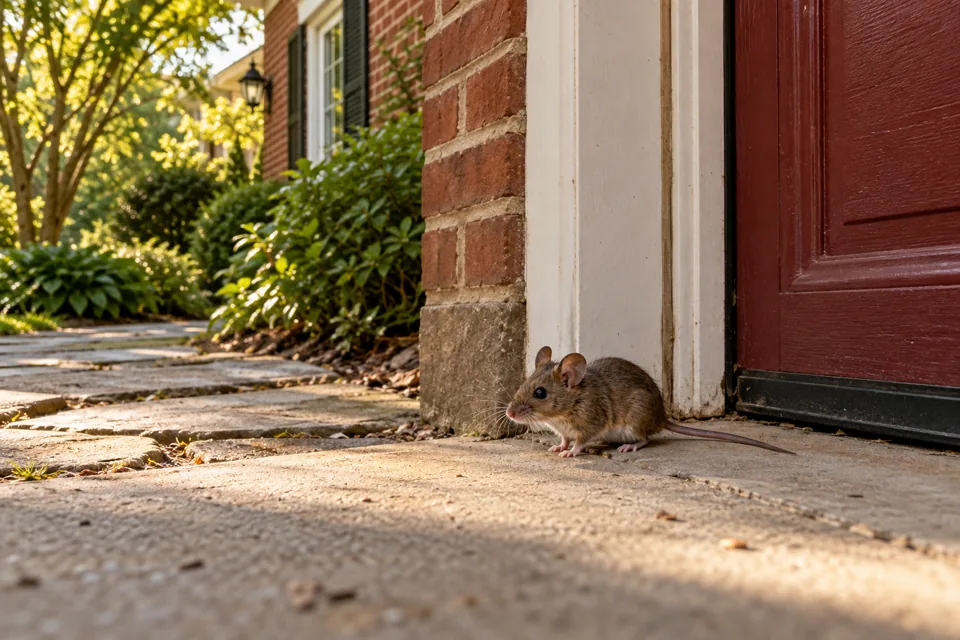
To describe the signs you have found, use Call Now and you will reach our team serving the Charlottesville area.
Signs of rats and mice
- Droppings along walls, in cabinets, in the attic and near food
- Greasy rub marks along baseboards, beams and entry holes
- Nests of shredded paper, insulation and fabric
- Gnaw marks on wood, wires, pipes and packaging
- Scratching, scampering and squeaking, usually at night
- Tracks in dust, burrows near foundations and chewed fruit
Where to look
- Yard: fruit trees, palms, wood piles and feeders
- Around pipes, wires, AC line sets and dryer vents
- Under sinks, behind appliances and in pantry corners
- Garage, sheds, crawl space and basement
- Attic edges, soffits, vents and the roofline
What a rodent inspection should tell you
- Nesting areas and the extent of contamination
- The species and the evidence for it
- Entry points found, with photos
- A plan for trapping, exclusion, cleanup and follow-up
- Areas that could not be inspected
Stay safe when you look
In dusty or contaminated areas put on gloves and a respirator, air the space out before entering, and never sweep or vacuum dry droppings. CDC and EPA cleanup advice should be followed.
What rodents damage besides food
Rodent teeth never stop growing, so rats and mice gnaw constantly. They chew electrical wiring, which is a fire hazard, strip insulation in attics and walls, gnaw plumbing and irrigation lines, damage stored boxes and vehicles, and contaminate surfaces with droppings and urine.
After a rodent problem, inspect attic wiring, ductwork and insulation, and ask a licensed electrician or HVAC professional to check anything that looks chewed.
Rodent cheat sheet
| Rodent | Body and tail | Droppings | Nest and entry |
|---|---|---|---|
| House mouse | About 3 inches of body, tail as long as the body | 1/4 inch, rod shaped | Wall voids and insulation, gaps near a quarter inch |
| Norway rat | 7 to 9 inches, tail shorter than body | 3/4 inch, capsule shaped | Burrows at foundations, basements, drains |
| Deer mouse | Slightly larger, white belly, bicolored tail | Similar to house mouse | Sheds, garages and boxes; handle droppings with care |
| Roof rat | 6 to 8 inches, tail longer than body | 1/2 inch, spindle shaped | Attics and trees, rooflines and vents |
| Pack rat (woodrat) | Larger, furry tail, large ears | Larger, dark, often in piles | Stick middens in garages, sheds, engine bays |
A checklist for this week
- Pick up fallen fruit and nuts
- Seal gaps around pipes and vents with steel wool or copper mesh and sealant
- Write down noises, droppings and damage with dates
- Keep trash lids on and clear clutter in the garage
- Trim branches back from the roof and remove vines from walls
- Book an inspection if signs continue
- Store pet food and bird seed in sealed bins and bring bowls in at night
- Add door sweeps and fix garage door seals
Rodent control terms explained
- Tamper-resistant bait station: a locked box that holds rodenticide outdoors, out of reach of pets and children
- Snap trap: a mechanical trap that kills quickly and keeps poison out of the structure
- Rub marks: dark, greasy smears left by fur along beams and entry holes
- Exclusion: sealing every entry with metal mesh, sheet metal, cement and screens
- Hardware cloth: galvanized steel mesh, usually about a quarter inch, used for vents and gaps
- Runway: the worn path rodents use along walls and edges
- HEPA vacuum: a vacuum with a high-efficiency filter used for droppings and dust in cleanup
Myths and facts about rodents
- Myth: cats solve a rodent problem. Fact: they may catch some, but they do not seal entry points.
- Myth: ultrasonic devices drive rodents out. Fact: independent evidence is weak and rodents get used to the sound.
- Myth: poison alone fixes it. Fact: poison does not close gaps and can leave dead animals inside walls.
- Myth: you only have rodents if you see them. Fact: they are nocturnal and the first clue is often droppings or noises.
- Myth: a rat needs a big hole. Fact: a rat fits through about half an inch and a mouse through about a quarter inch.
What changes the scope of the work
Neighboring houses rarely need identical signs and inspection: rodent control work, because age, landscaping and moisture differ from one lot to the next. A good written scope names the factors that shaped the plan for your address and shows how each one widened or narrowed the work.
Two things make proposals easier to compare: a clear line between a single treatment and ongoing service, and a note of anything the technician could not get to. Scopes that name the places you were worried about, such as the attic, crawl space, garage or fence line, beat a generic package every time.
- How far the problem has spread and how long it has been active
- Number of entry points, gaps around pipes and cracks in the foundation or siding
- Size and age of the home, and whether it sits on a slab, a crawl space or a basement
- Access to attics, wall voids, sheds, outbuildings and the yard
- Whether you want a single treatment or an ongoing plan with scheduled visits
When to call a professional
Pick up the phone when the pest is a mystery, when your own efforts have not stopped it from returning, when it is hiding in walls, attics or crawl spaces, or when children, pets or health conditions rule out guesswork. Use Call Now at the top of the page and say what you found; you will reach our team serving your ZIP code, which puts the scope in writing.
What this means for a home in Charlottesville
Charlottesville sits in the Blue Ridge foothills, with many older brick homes, historic districts and wooded lots. Mature trees give squirrels and roof rats a route to rooflines and attic vents.
Older masonry, crawl spaces and basements have gaps at sills, pipes and vents that mice and rats use. Wooded edges, streams and rural parts of the surrounding county keep rodent pressure high near homes. When weighing different advice, bring these local facts in, and ask us to explain how they apply to your property.
Getting help in Charlottesville and nearby cities
Through Rodent Control Charlottesville, you reach our team for Charlottesville, Virginia: . We also serve Crozet, Earlysville, Ivy, Scottsville and Free Union, and every address is checked for coverage separately.
Use Call Now at the top of the page and describe what you found. We check your address, inspect the property and put the scope in writing.
Keep reading
Related pages for Charlottesville homeowners: Rodent inspection; Comparing rodent control quotes; Rodent exclusion; Mice and rat control. For the area list, see the service areas page.