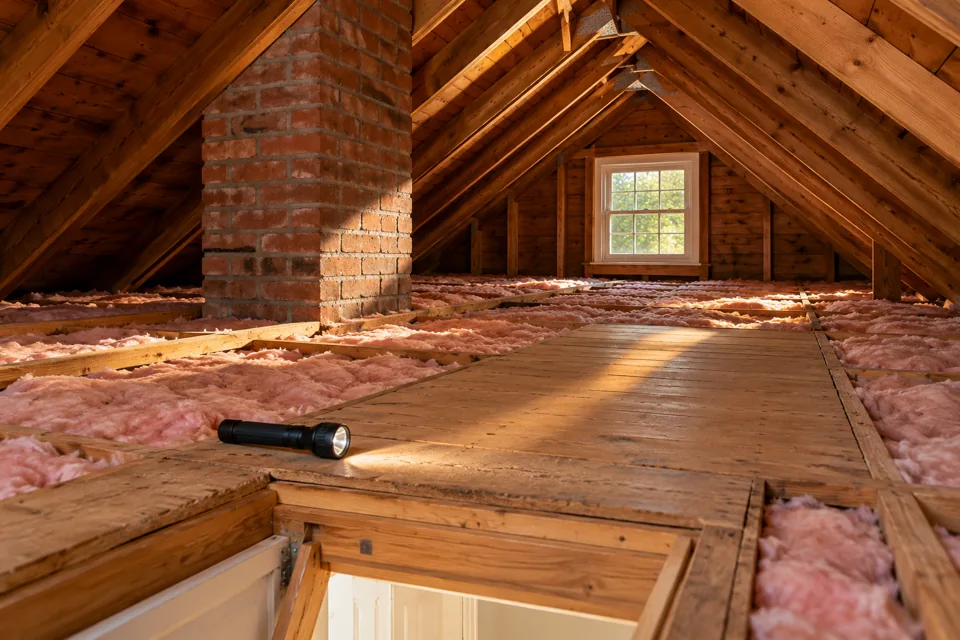
Expect the roofline to be inspected, traps placed up in the attic and each way in closed off. Describe the noises you hear overhead using Call Now, and you will reach our team serving the Charlottesville area.
Signs of rodents in the attic
- Scratching, scampering and thumping at night
- Greasy rub marks on rafters and entry holes
- Droppings along beams, in insulation and near vents
- A musty or ammonia-like smell in upper rooms
- Chewed wiring, ducts and stored boxes
How attic rodent control works
- Inspect the roofline and attic to find the species and the entry points
- Place snap traps along runways and near entry holes
- Check and reset traps until activity stops
- Seal the entry points with metal mesh, sheet metal and vent screens
- Clean, sanitize and replace contaminated insulation where needed
After the work
A few weeks on, look in the attic again for new droppings or noise. Cut branches back from the roof, pick up fruit and pet food, and ask for the roofline to be checked after storms.
Safety in the attic
Attics are hot, dusty and have exposed wiring and nails. We wear respirators and protective clothing. Do not go into the attic if you suspect heavy contamination, and keep children and pets out of the work area.
How an attic rodent control visit works, step by step
A good visit follows the same order every time, whatever the pest. Knowing the order helps you compare what each company offers and spot a visit that skips the first two steps.
- Inspection: the technician walks the outside first (foundation, vents, utility lines, eaves, fence lines, mulch) and then the inside (kitchen, bathrooms, garage, attic or crawl space).
- Identification: the species is named from the insect, droppings, damage or trail, because the right product and method depend on it.
- Plan: we explain what will be done, which products or devices will be used, and what you need to do before and after.
- Treatment or exclusion: the work is done in the places the inspection found, not by spraying every room.
- Follow-up: you get a date for the next check and a clear answer on what to report if activity returns.
Questions to ask before you agree to any attic rodent control
- What species or problem did you find, and what did you see that proves it?
- How many visits are in the plan, and what happens if activity returns?
- Which products, baits or devices will you use, and where will they go?
- What will you seal, remove or fix, and what stays my job?
- What will you write down for me: scope, exclusions, follow-up and product list?
- Who is on site, and can you show the state licence or applicator ID for the work?
Prepare your Charlottesville home before the visit
Getting ready takes less effort than most people expect. A few small steps speed up the inspection, help the product do its job, and leave your rooms mostly as they are.
- Tell our technician about pets, fish tanks, asthma, pregnancy or any health concern in the home so the plan fits.
- Write down where you saw activity, what time of day, and when it started. Take clear photos or save a sample in a sealed bag.
- Clear a path to the garage, water heater, under-sink cabinets, attic hatch and crawl space door.
- Put away food, pet dishes and children's toys from the rooms being treated.
- Fix a dripping tap or wet spot you know about. Moisture feeds most household pests.
Mistakes that make attic rodent control harder
When a treatment fails, the reason is usually one of a short list of common errors, and each of them is simple to avoid once it is pointed out.
- Judging results in a week. Many programs take two to four weeks and a follow-up to settle.
- Mixing products. Overlapping chemicals can reduce results and add risk.
- Skipping the entry points. Without sealing, new pests replace the old ones.
- Spraying store-bought products around bait. Repellent sprays can make insects avoid bait they would otherwise eat.
- Treating only where you see the pest. Activity you see is usually a fraction of what is hidden in walls, voids and soil.
What changes the scope of the work
Neighboring houses rarely need identical attic rodent control work, because age, landscaping and moisture differ from one lot to the next. A good written scope names the factors that shaped the plan for your address and shows how each one widened or narrowed the work.
Two things make proposals easier to compare: a clear line between a single treatment and ongoing service, and a note of anything the technician could not get to. Scopes that name the places you were worried about, such as the attic, crawl space, garage or fence line, beat a generic package every time.
- How far the problem has spread and how long it has been active
- Number of entry points, gaps around pipes and cracks in the foundation or siding
- Size and age of the home, and whether it sits on a slab, a crawl space or a basement
- Access to attics, wall voids, sheds, outbuildings and the yard
- Whether you want a single treatment or an ongoing plan with scheduled visits
What makes attic rodent control different in Charlottesville
Charlottesville sits in the Blue Ridge foothills, with many older brick homes, historic districts and wooded lots. Mature trees give squirrels and roof rats a route to rooflines and attic vents.
Older masonry, crawl spaces and basements have gaps at sills, pipes and vents that mice and rats use. Wooded edges, streams and rural parts of the surrounding county keep rodent pressure high near homes. What works in one climate or housing style can fall flat in the next, so ask us to explain how these local details shape the plan for your property.
Attic rodent control across Charlottesville and nearby cities
Rodent Control Charlottesville covers Charlottesville, Virginia and the surrounding area. We also serve Crozet, Earlysville, Ivy, Scottsville and Free Union. We work address by address, so give your ZIP code when you call.
To get going, press Call Now at the top of any page and tell the person who answers what you found. That puts you through to our team nearby, and we verify your address, look the property over and writes up the scope.
Related help in Charlottesville
If this is not quite your situation, these pages cover the neighboring questions: Rodent exclusion; Rodent inspection; Comparing rodent control quotes; Signs and inspection: rodent control. The service area list shows every nearby city and ZIP code covered.